For a cleaner, more prosperous world, ACC mobilizes conservatives around environmental issues, fostering collaboration in the pursuit of environmental conservation.
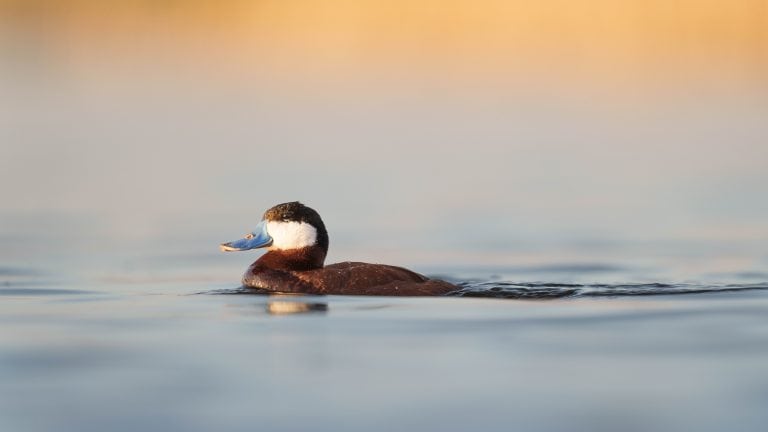
Imagine a park in your city or town with a few verdant ponds. The ponds uniquely excel as breeding grounds for birds, so much so that they account for over half of your entire state’s bird breeding habitat. People joke and lovingly call the park and its ponds the “duck factory” for their unique status as a top-tier bird breeding ground.
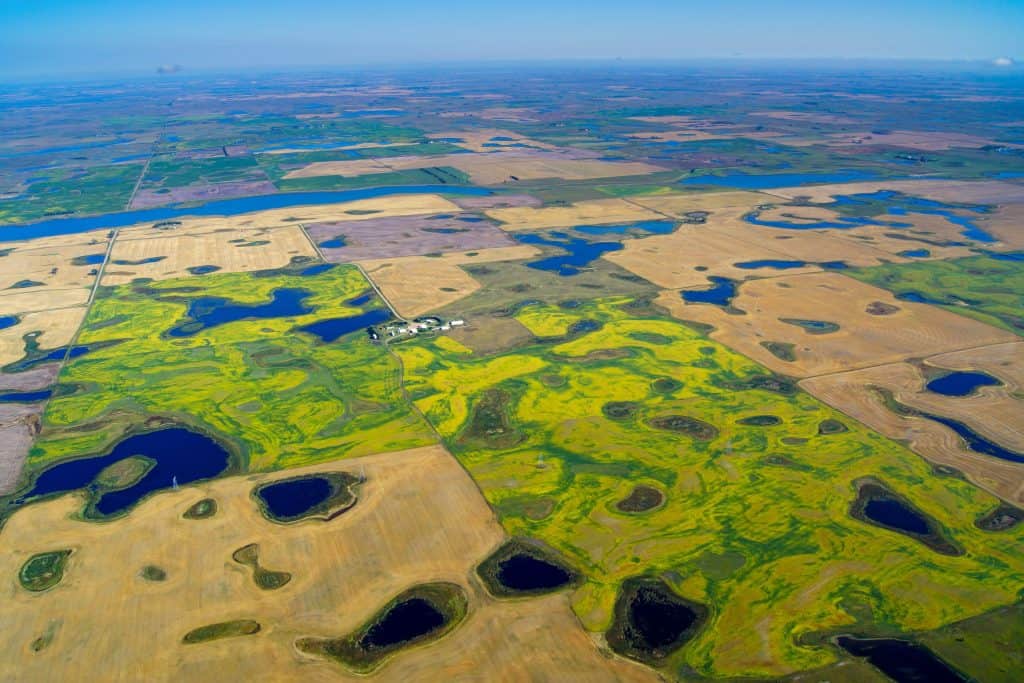
Now imagine that the park is not one singular enclosed greenspace but rather those ponds are scattered across thousands of privately owned farms stretching hundreds upon hundreds of miles across the northern US and Canada. Those landowners, those hunters, those farmers have voluntarily protected the ponds through conservation easements that keep the ponds safe and intact while the surrounding land stays in productive agricultural use. This results in a vast network of wetlands that does indeed still produce the majority of breeding habitat for migratory birds.
The duck factory is real. It is called the Prairie Pothole Region (PPR), and we established rules in 2024 to protect it that need to remain.
Modern agriculture often relies on something called an underground drain tile. They’re perforated pipes that drain excess water from fields so the crops don’t rot. They’re useful, to be sure, but if such pipes are placed too close to the PPR’s ponds, they will slowly lower the water table or intercept the shallow flows that keep the wetlands teeming with life. These duck-breeding super ponds of the PPR appeal to the migratory fowl because of the innate shallowness, but that shallowness means they can stop holding water very easily if their inlet flow is disturbed.
So, how close can these agriculturally-useful drain tiles be placed to the PPR’s ponds without destroying the duck factory while still allowing for agriculture?
The U.S. Fish and Wildlife Service answered that question by providing site-specific setback rules in 2024. Landowners request a setback calculation based on soil type, topography, tile depth, and more. The Service then provides the guidance, and the landowner voluntarily follows it. This custom tailoring is essential because no two wetlands are exactly alike. Rather than applying one rule everywhere, the 2024 framework accounts for the unique conditions of each property.
The Service is now revisiting the setback rules and deciding if they are working.

This is the approach we at ACC support. The tailored, individualized standard is correct but if we instead adopt a more permissive approach focused on minimal effects, the duck factory suddenly falls under unnecessary risk.
The 2024 rule makes clear that the Service’s wetland easements are different from the USDA Natural Resources Conservation Service’s “Swampbuster” program. Swampbuster is an agricultural program that discourages farmers from converting wetlands into cropland by tying wetland conservation to eligibility for certain USDA benefits. The two also have very different standards: the Service’s “no effect” standard allows only about 1.2 inches of water to drain from a wetland over 14 days, while Swampbuster’s “minimal effects” standard allows up to 12 inches.
Ultimately, these two mechanisms exist to do very different things: Swampbuster establishes a baseline for participation in federal agricultural programs. The Fish and Wildlife Service easements protect wetlands that landowners have voluntarily committed to conservation while defining specific obligations tailored to specific pieces of ground. This tailoring is key as no two wetlands behave exactly alike. A universal setback or a looser “minimal effects” test cannot capture the differences of topography, drainage, depth, and more with the same precision as a site-specific calculation.
The 2024 setback framework gives landowners clear guidance and, what’s more, it protects voluntary conservation agreements that already work.
The duck factory has endured because the good people across the Prairie Pothole Region have chosen to protect it.

Ryan Anderson is the Stakeholder Communications Manager at the American Conservation Coalition.