
For a cleaner, more prosperous world, ACC mobilizes conservatives around environmental issues, fostering collaboration in the pursuit of environmental conservation.
Four people stand around a table, stuffing cotton balls into cardboard toilet paper tubes. At first glance, it looks like a craft project, the kind of thing you’d expect to see in an elementary school, maybe around Christmas. What is actually happening is the start of a conservation project in its most fundamental form. The group is making “tick tubes” headed to a farmer’s market to be handed out to people to place along the woodline, in their barns, among brush piles. The group handing out the tubes will get help from their community, yes, but also another unlikely ally: mice. The tubes themselves will not kill ticks, but the cotton balls inside are coated in permethrin and will be used by mice to build nests. The tubes themselves are not complex and not particularly interesting, but what is interesting is this story and how it shows us how conservation works.

More Americans are enjoying the outdoors than any time since tracking participation outside began. A truly record number of people went outside in 2019 and never really looked back; fishing spots, hiking trails, and campgrounds are all seeing record attendance. This also means a record number of Americans are encountering ticks for the first time. Ticks are also on the rise with milder winters, more deer, and more mice for them to feed on. Naturally, as more Americans are spending time outdoors and ticks are flourishing, our communities are looking for ways to combat tick-borne disease without causing unnecessary harm to wildlife, pollinators, or our land. We know permethrin kills ticks, but we also know it kills other insects as well.

It is so easy in our modern world to give in to panic and despair. Bring up the topic of ticks and inevitably someone will screech some half-baked fact about Lyme disease. Worse is when we throw up our hands and complain that weather patterns are changing, it is getting warmer, and there is just nothing to be done about the growing tick population. People will shrug, blame capitalism, global warming, or any number of things without ever actually choosing to do something. Luckily, it turns out that the distance between despair and action is pretty small.
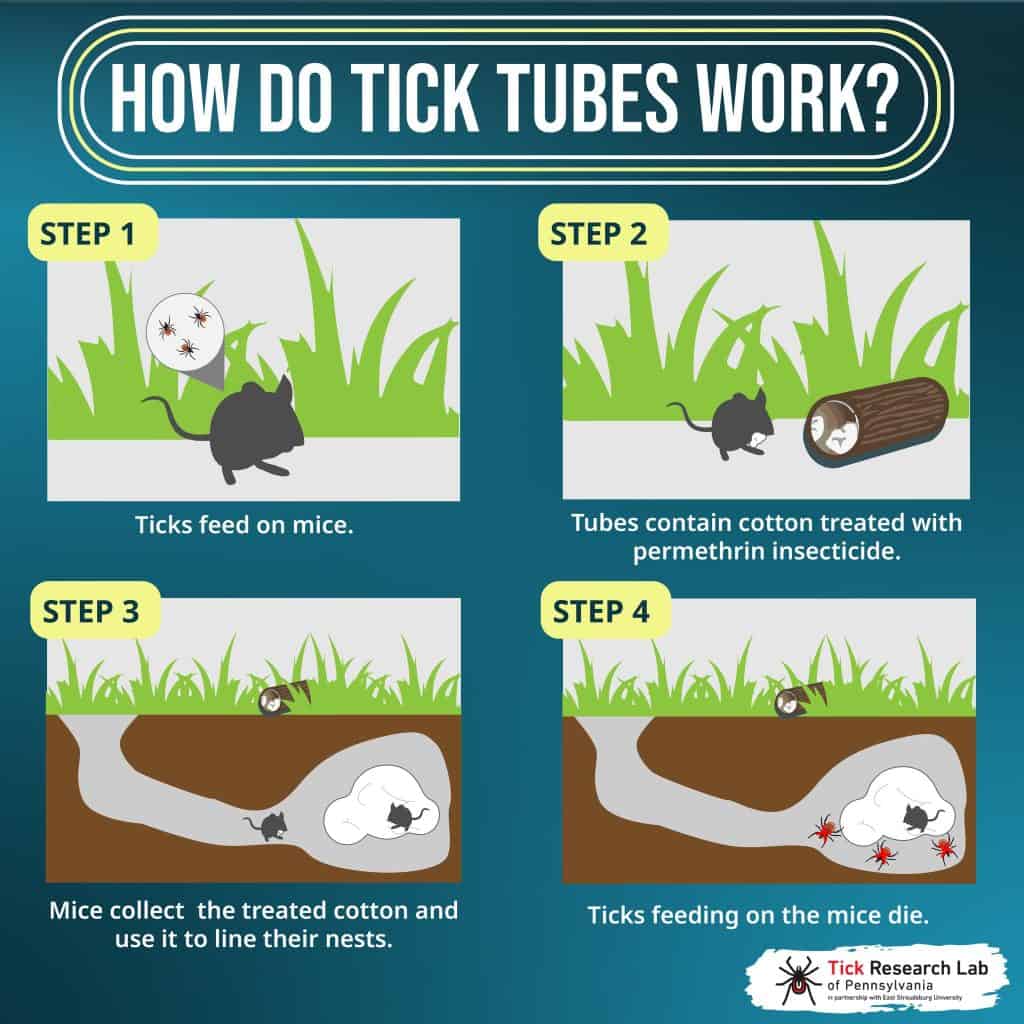
This is where the tubes and cotton balls come in. We don’t want to spray permethrin all over our homes and kill helpful pollinators and other insects, but by coating the cotton in permethrin and placing them in cardboard tubes mice will find, we can limit the exposure and target the ticks directly with precision. It works like this: the cotton is treated with permethrin, mice are major hosts for young ticks, mice gather the cotton for nests, and the treatment kills ticks on the mice without broadly spraying the landscape. The team makes the tubes, the community places tubes where mice are likely to nest, and the mice become participants in the tick control.
This is where the story becomes larger than tick control, however. The project doesn’t work because the idea is clever or the ACC members who made the tubes worked hard; the project works because the community will show up, share information, lend a hand, and place them on their properties. A single homeowner placing a few tubes around their property doesn’t make much of a difference but when a whole neighborhood does it, the ticks take a beating without blanketing the whole town in insecticide. The science and the precision here matter but the community showing up and everyone (even the mice) doing one small thing matters more. That’s ultimately what grassroots conservation is all about.

Ryan Anderson is the Stakeholder Communications Manager at the American Conservation Coalition.