For a cleaner, more prosperous world, ACC mobilizes conservatives around environmental issues, fostering collaboration in the pursuit of environmental conservation.
ACC mobilized 1,100 volunteers across 50 events for Earth Week, the largest coordinated grassroots effort in our history. Volunteers cleaned shorelines, planted trees, restored land, and stepped into statehouses to carry the work of conservation into policy. It all moved at once, across beaches, parks, statehouses, and working land.
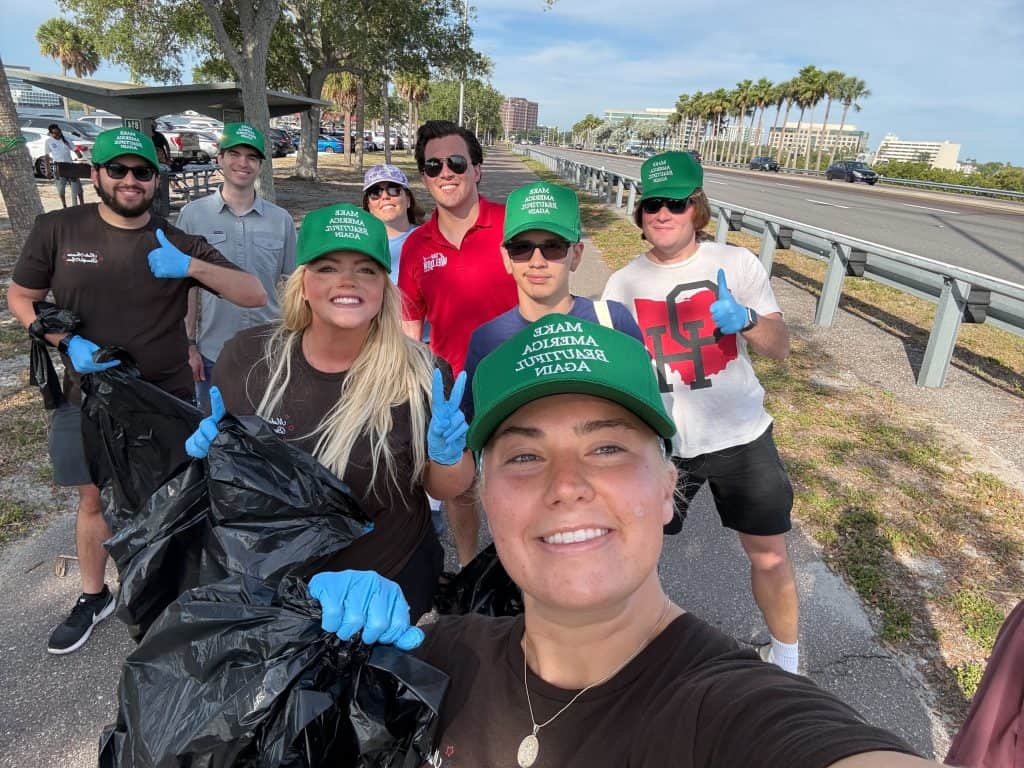
In Florida, that effort spread across coastline, waterways, working lands, and major restoration sites. In Tampa Bay, volunteers removed dozens of bags of trash from one of the most polluted beaches in the region, restoring a stretch of shoreline that is too often neglected. In Broward County, volunteers launched kayaks at sunset and worked their way across the water, collecting debris as they went while building relationships among partners and community leaders. Along the Space Coast, a large volunteer group gathered at Hangars Beach on Patrick Space Force Base and moved through the dunes and shoreline, clearing debris and leaving the coast in better condition than they found it. In Fort Myers, leadership stepped into a different kind of effort, walking the land at Babcock Ranch Preserve and seeing how conservation and working lands have shaped the region across generations. That same group toured one of the nation’s largest solar-powered communities, where thousands of panels now support an entire town and show how energy, land use, and conservation can move forward together. At the Everglades Agricultural Area Reservoir, the scale widened further as state leaders, federal partners, and local advocates gathered around one of the most consequential restoration projects in the country, a system designed to store water, reduce harmful discharges, and send clean water south into the Everglades. Across Florida, people showed up in very different places and carried the same responsibility into each one, restoring what they could and strengthening what remains.

In Texas, the work of conservation spread across cities and campuses and carried a different kind of energy. In Fort Worth, volunteers planted three native trees at the Botanical Gardens, setting roots that will grow into shade and structure in the years ahead. In Austin, members partnered with the Austin Young Republicans and worked the Town Lake trails, moving along the water and clearing what had built up over time, restoring a stretch of one of the city’s most used public spaces. In Huntsville, the Sam Houston State University chapter organized a “Texas Takeover” cleanup, splitting into teams and moving across the landscape in a friendly competition that turned into something more serious as the work took hold. Groups spread out, covered ground, and cleared what they could, bringing a sense of momentum and shared purpose to the effort. In Houston, volunteers joined with local partners along Buffalo Bayou and removed more than 30 full bags of trash from the surrounding areas, working through the space piece by piece and leaving it in better condition for the people who rely on it. The work moved across Texas in force, carried forward by people who know these places and are willing to take responsibility for them.
In Colorado, that same responsibility carried across community, policy, and land. The week began in Denver with a happy hour hosted by ACC, where members gathered ahead of Earth Day to connect, trade stories, and set the tone for what followed. That energy carried into the State Capitol, where members met directly with legislators in both the House and Senate, stepped onto the chamber floors, and took part in conversations that shape conservation outcomes across the state. Decisions made in those rooms determine how land is used, how water is managed, and how long-term priorities take hold. Later in the week, the effort returned to the land at the Rocky Mountain Arsenal National Wildlife Refuge, where volunteers spent the morning removing invasive species such as thistles, mullein, mint, and catnip, working methodically across the ground and opening space for native plants to return. The work asked for patience and attention, and it left the land in better condition for what comes next.

Across North Carolina and Colorado, advocacy days reinforced the connection between local effort and policy. Members stepped into legislative spaces and carried their experience from the field into conversations that shape long-term outcomes. What happens in parks, on shorelines, and in preserves carries into those rooms, and what is decided there works its way back into the land. A restored beach depends on policies that protect it, and a healthy river system depends on decisions that sustain its flow over time. When those efforts move together, the work of conservation holds.
This year’s Earth Week effort made that visible. Volunteers showed up in their communities, engaged directly with the land, and carried that same responsibility into the places where long-term decisions are made. The scale was real, the effort was visible, and the work of conservation continues from here, carried forward by people who choose to show up in the arena and tend to the good green places of America.

Ryan Anderson is the Stakeholder Communications Manager at the American Conservation Coalition.