
For a cleaner, more prosperous world, ACC mobilizes conservatives around environmental issues, fostering collaboration in the pursuit of environmental conservation.
For many of the challenges facing American conservation today, the barrier is rarely technical but rather all-too-often cultural; we possess the knowledge to steward forests more responsibly, we understand how to expand reliable energy, we have the engineering capacity to build nuclear plants that operate safely and consistently.
In short, the technology is there.
What remains fragile however is public trust.

Without it, good policy ultimately stalls. Whether at a local water meeting or before a federal regulator considering a reactor restart, the central question is the same: do people believe the work is serious, disciplined, and accountable? American conservation will advance only insofar as it rebuilds that public trust through transparency, restraint, and visible competence. The task before us is not simply to develop solutions, but to cultivate the cultural confidence that allows those solutions to be used.
That question surfaced clearly in our recent grassroots event with Rainmaker. Cloud seeding is not a novelty and has existed for decades. What Rainmaker has added is modern data, drone deployment, and independent validation. Yet the discussion in the room centered less on physics and more on credibility: Rainmaker’s Greyson Gee graciously fielded many questions about Texas flooding, silver iodide, and atmospheric manipulation that were not hostile so much as curious. Water carries a great deal of consequence and people want clarity before they believe but Gee met those questions directly; Rainmaker does not create storms and only operates only within narrow atmospheric conditions and produces modest, measurable effects. The tone mattered here. Stewardship in public view builds trust because it welcomes scrutiny rather than avoiding it.

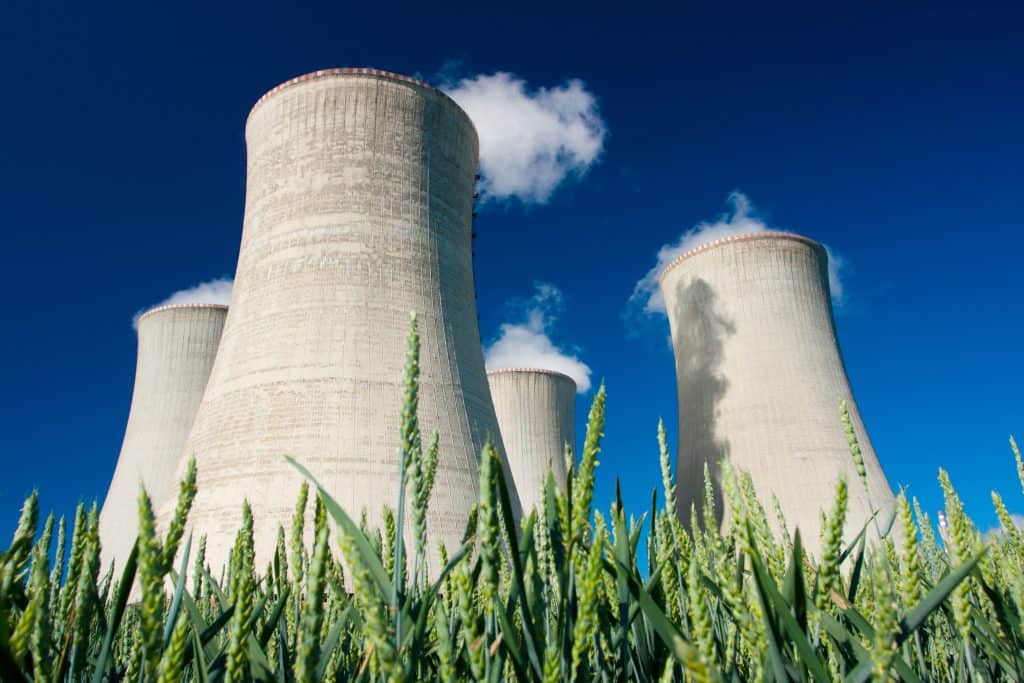
The same pattern appears at the national level in the nuclear conversation. Advanced reactors today bear little resemblance to the designs that shaped public anxiety in the 1970s; many now rely on passive safety systems that use gravity, natural circulation, and automatic shutdown features rather than constant human or mechanical intervention. Regulatory modernization through legislation such as the ADVANCE Act reflects a growing recognition that innovation requires a predictable framework. With all this in mind, public support for nuclear energy now quietly sits near record highs yet the debate often continues to be circled by fear. Three Mile Island, Fukushima, and Chernobyl remain cultural reference points even when the technology and regulatory environment have evolved to be unrecognizable from the reactors of yesteryear. The lesson is not that caution was misplaced of course, but rather that caution without updated understanding metastasizes into stagnation. Nuclear energy demands trust grounded in transparency, rigorous oversight, and cultural clarity about what the technology actually is and how it functions.
These two conversations, one local and one national, reveal a shared throughline: environmental progress advances when institutions and innovators treat the public as participants rather than obstacles. Rainmaker’s incremental snowfall gains and a restarted nuclear facility both require something more than technical viability.
They require confidence built over time.
That confidence grows when leaders answer questions without condescension, acknowledge limits without defensiveness, and demonstrate that restraint and ambition can coexist. Cultural leadership precedes policy durability. When people see environmental work presented as serious, bounded, and accountable, resistance softens and space opens for action.
This is the role ACC increasingly occupies.
At the grassroots level, we host conversations that place applied stewardship in plain sight. At the grasstops level, we advocate for reforms that modernize regulation without abandoning rigor. In both arenas, the aim is the same: rebuild trust in conservation as disciplined work carried out by people who respect consequence. The future of American environmental leadership will not be secured by rhetoric alone. It will be secured by showing up, explaining clearly, correcting honestly, and building steadily. For many of the challenges before us, the decisive factor will not be whether we can engineer solutions. It will be whether we can sustain the trust required to use them well.

Ryan Anderson is the Stakeholder Communications Manager at the American Conservation Coalition.