
For a cleaner, more prosperous world, ACC mobilizes conservatives around environmental issues, fostering collaboration in the pursuit of environmental conservation.
Water has always been a matter of life and death in the American West. It shapes settlement, work, and the future of entire communities. The inconvenient truth, one learned early by anyone who lives west of the hundredth meridian, is that rivers do not move where we wish them to, snowpack does not arrive on command, and reservoirs rise and drain with indifferent regard for political calendars or talking points. That’s the thing though: water is neither abstract nor ideological. It is practical, physical, and unforgiving. The American West learned this lesson the hard way, and is building accordingly. Attention matters. Adaptation matters. Endurance matters. From irrigation ditches hand-cut into desert soil to modern reservoir systems and water compacts, Western water management has always been defined by a willingness to observe reality clearly and respond with disciplined effort, reality, and honesty.

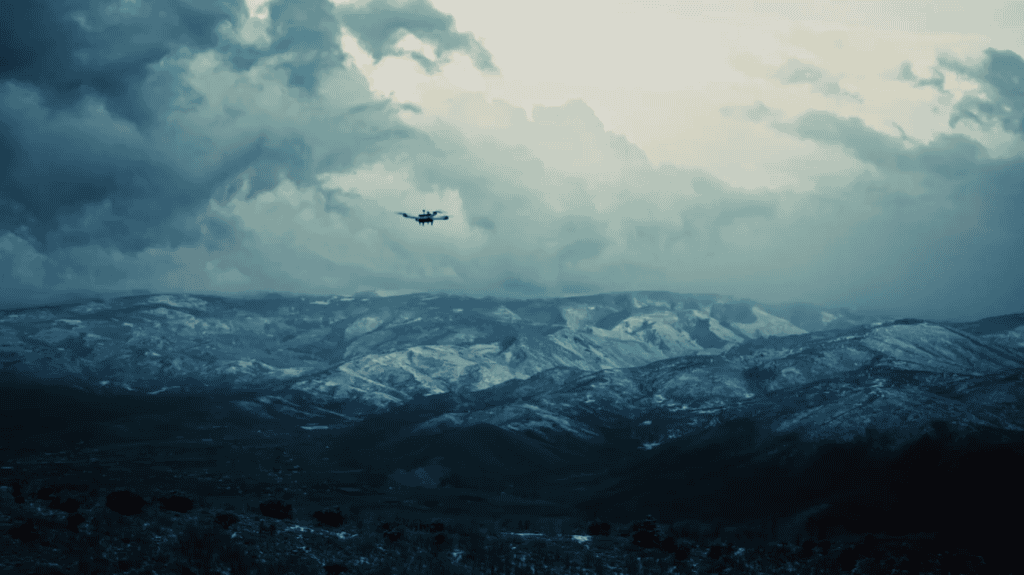
That instinct remains alive, and it was visible in ACC’s recent joint educational event with Rainmaker hosted by our Austin Hub. Rainmaker’s government affairs lead, Greyson Gee, walked attendees through the history of cloud seeding, the limits of the technology, and the specific ways it has contributed in practice. The conversation reflected a long-standing Western habit of meeting hard constraints with careful experimentation and honest hearts. Cloud seeding is not a recent invention. It emerged more than eighty years ago from American scientists responding to American conditions. In fact, ACC hosted a fireside chat with Rainmaker last year to discuss their process. Rainmaker’s work represents a continuation of that tradition, updated with modern tools. Drones now replace aircraft. Data guides decisions once made by intuition alone. Independent evaluation replaces hopeful assumptions. The discussion stayed grounded in reality; what Rainmaker described was incremental work, bounded by physics, geography, and probability.

Since 2017, Rainmaker has operated in Utah, Nevada, and California, contributing measurable increases in snowfall under the right conditions. Those conditions matter. Cloud seeding does not generate storms. It does not override weather systems. It operates only when atmospheric patterns already support precipitation, and even then, its effects remain modest. This clarity matters. Water work carries real consequences, and credibility depends on being precise about both capability and limitation. The West has no patience for exaggeration because exaggeration breaks trust and results in actual harm. Rainmaker’s early validation study conducted by the Center for Severe Weather Research, provided an initial benchmark and now ongoing studies led by independent universities and agencies continue to refine methods and evaluate outcomes. This slow, careful testing reflects a distinctly American approach to innovation in land and resource management.
Try something.
Measure it.
Improve it.
The questions raised during the discussion revealed something else worth noting. Much of the skepticism surrounding cloud seeding is not rooted in technical objection so much as uncertainty about process and intent. When systems are complex and unfamiliar, speculation has room to breed and fester. Public-facing work invites scrutiny, and water management justifiably invites more than most. Greyson addressed claims linking Rainmaker to flooding in Texas directly and plainly, noting pointedly that Rainmaker is not able to affect the weather to that degree. Questions about silver iodide and so-called chemtrails were handled with patience and clarity. No one was talked down to. No one was dismissed. The exchange illustrated an important principle often overlooked in environmental conversations. Stewardship requires public understanding, and public understanding depends on transparency sustained over time.
That commitment to openness is part of why ACC chose to host the event. Applied stewardship belongs in public view. Cultural confidence develops before policy. When people see environmental work presented as limited, accountable, and grounded in reality, trust follows. We need that trust because the challenges are real and won’t be solved by a single breakthrough or a sweeping decree. They will be addressed through steady effort repeated across seasons and years. Rainmaker represents one tool among many, contributing where it can without claiming to be more than it is. That restraint is a mark of seriousness.
American conservation has always advanced through this kind of work. It values effort over performance, results over rhetoric, and patience over spectacle. The West in particular has no use for illusions. It rewards people who show up, study conditions, and stay with a problem long enough to improve it. As water crises increase across the region, solutions grounded in discipline, data, and responsibility will matter more than ever. ACC’s role in these conversations reflects a broader commitment to cultural leadership rooted in honesty and competence. Policy follows culture, trust follows work, and work done well and explained clearly remains one of America’s most reliable resources.


Ryan Anderson is the Stakeholder Communications Manager at the American Conservation Coalition.