

For a cleaner, more prosperous world, ACC mobilizes conservatives around environmental issues, fostering collaboration in the pursuit of environmental conservation.
There’s an uncomfortable truth we have to grapple with now and then as Americans; patriotism cannot just be spoken, pledged, or chanted into existence.
It has to actually be practiced.
It needs to be forged in the quiet heat of a neighborhood, worked into our muscles, learned in places with real names. It grows the way roots grow: quietly, locally, by repetition.
It grows in service.
That’s the heart of ACC’s Land That We Love campaign. A week of action spread across America: branches hosting cleanups, food drives, veteran support, hikes, plantings, care for the homeless, and a hundred small acts of conservation coalescing into a national impact.
Florida: soap, bonfires, and abundant gratitude
If you want to understand a movement, just look at where it spends its Saturday.

In Orlando, ACC members spent theirs at the headquarters of Clean the World, a group with a deeply practical imagination: take the unused soap and hygiene products left behind in hotels and resorts and turn them into dignity for children and families. Orlando volunteers sorted materials and assembled hygiene kits, putting their hands on a kind of conservation the modern world forgets to call conservation.
Waste becomes usefulness.
Disposability becomes a second life.
A local warehouse becomes a bridge to global flourishing.
The world is full of discarded things that are still good. The same is true of places, and people, and neighborhoods. Stewardship begins when we stop treating everything as disposable.

Up in Tallahassee, the posture was different but the spirit the same. ACC Florida’s Tally team hosted a community bonfire in the heart of the capital. Pizza and conversation with legislative staff, neighbors amid a galvanizing glow. It wasn’t just a bonfire for relaxation, though; by its light, they stacked a pallet of food for Second Harvest, turning fellowship into real support for families heading into the Thanksgiving season.
Bonfires are one of those old technologies of community. You put wood in the middle, you light it, and people come closer to one another without being told. When they do, giving becomes natural. You suddenly feel the needs of your neighbors as something near, not some distant and abstract idea.
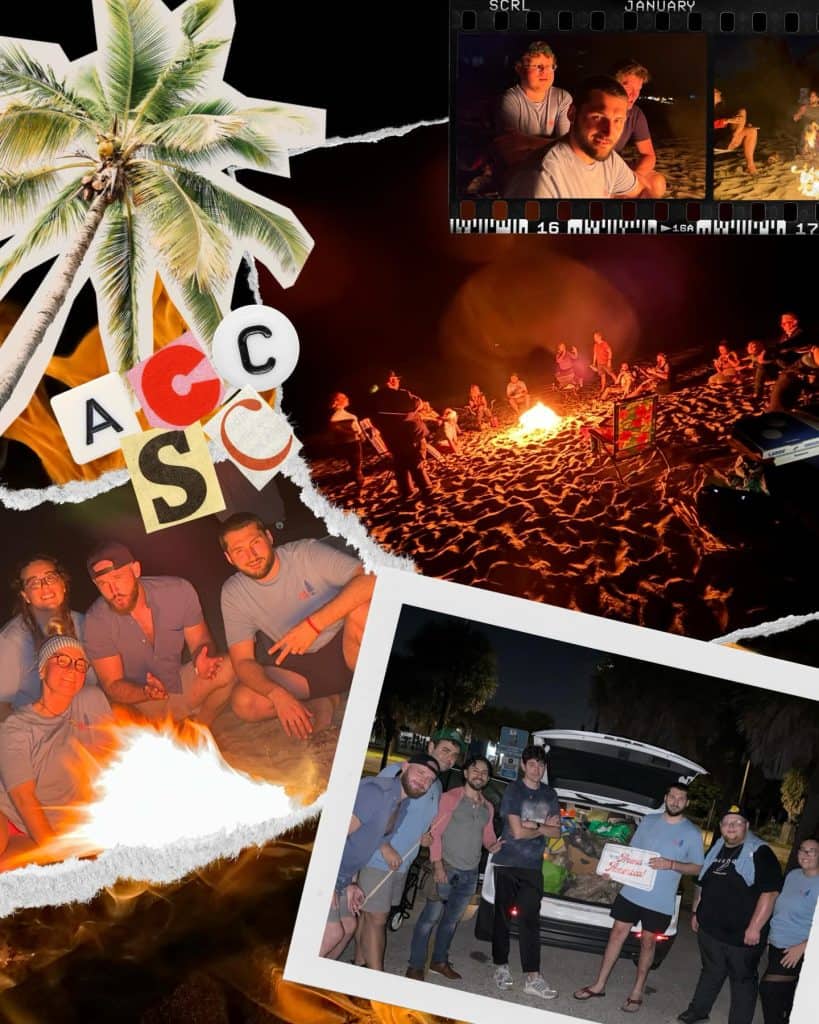
Down on Space Coast, the week of action doubled as a relaunch. More than thirty attendees showed up at James H. Nance Park for a sunset bonfire led by new branch leader Austin Ekonomou. They came for fellowship and a shared purpose, and they left with a State Director’s SUV filled to the brim with canned goods for families in need.
Beaches, parks, and a box of food in the backseat. Neighbors laughing by a fire while building an invisible pantry for the town. This too is conservation: conservation of a community, of families, of life.
Florida showed us something essential this week: loving land and loving people are not competing virtues. They’re joined, and their sum is patriotism.
South Carolina: a park you can name, a place to which you can return

ACC Clemson officially stepped onto the map during Land That We Love with a park cleanup at Abernathy Park. If conservation is ever going to be more than an idea, it has to be this kind of thing: a group of people and neighbors carrying bags along a park with a name you can point to and return. The place you’ll walk through again next week, the place your friends sit in, the place kids will run without ever knowing what it took to keep it nice.
It’s an old civic truth: people protect what they know, and they know what they have worked for. A cleanup is a sort of keystone to belonging to a real place. It creates a sense of ownership, of agency. This sense of belonging, of place, is the seedbed of conservation.
Clemson, welcome. Keep going.
Indiana: hiking, food drives, and letters that bind generations
In Indiana, ACC Hoosiers closed out the week with a hike at Brown County State Park, a reminder that part of loving a place is also letting it work on you, letting its ridgelines and leaf-fall and cold air teach your lungs what America smells like.

The Hoosiers didn’t stop at the trail, however. They paired the week with a food drive and then turned their attention toward those who have carried weight for the country. Members made 85 thank-you cards for veterans, to be sent to an Air Force base in California.
They paired the week with a food drive/social event, and then turned their attention toward those who have carried weight for the country. Members gathered to make 85 thank-you cards for veterans, which will be sent to an Air Force base in California.
That, too, is a form of conservation: conserving honor, conserving memory, conserving the civic habit of saying we see you, and we are grateful.
Maryland: pulling ivy, planting natives, restoring a campus commons
At the University of Maryland, ACC Terps took on a job that rarely goes viral but always matters: the slow work of undoing what doesn’t belong and resettling what does. For months, members removed invasive English ivy from garden beds in front of Symons Hall. During Land That We Love, they went back to fill those beds with native plants, rebuilding biodiversity on their campus.

There’s a whole philosophy tucked into that sequence.
First, you remove the invasive thing that smothers the life beneath it.
Then you plant what can actually thrive there.
Then you keep showing up.
This is conservation as friendship with a place. Not a one-day photo op, but the durable patience of real stewardship. The ivy didn’t grow in a week. A native bed doesn’t rebloom in a week. You learn at a different pace when you do this kind of work. You learn a sort of perennial realism, the sense that renewal is possible but only through fidelity.
In a culture where impermanence, disposability, and speed are pushed, this sort of fidelity to a place and laboring for it time and time again becomes a radical act. It, like the ivy, should not be overlooked.
The Land We Love, the Place We Serve
Everyone who participated in Land That We Love came and embodied an old American ethos, a lived patriotism that stays close to home. This live patriotism, this true conservation, manifested in different ways. It appeared in parks cleaned and cared for, through pallets of food stacked for families, with hygiene kits built from what would have been thrown away, among native plants set back into soil, in the margins of notes of thanks sent to those who served. It manifested in Florida bonfires and Indiana hikes, in campus beds and city warehouses, in a hundred local labors that add up to a national posture.
Keep doing it.
Keep gathering your people and blessing your place.
The love that mends a town is the same love that can steady a country.

Ryan Anderson is the Stakeholder Communications Manager at the American Conservation Coalition.